
If Your Team Is Confused, Start With This One Leadership Check
Confusion rarely announces itself loudly.
It shows up quietly.
In repeated questions.
In work that technically gets done but somehow misses the mark.
In teams that seem busy but not aligned.
Founders often respond by adding more communication. More updates. More check-ins. More documentation.
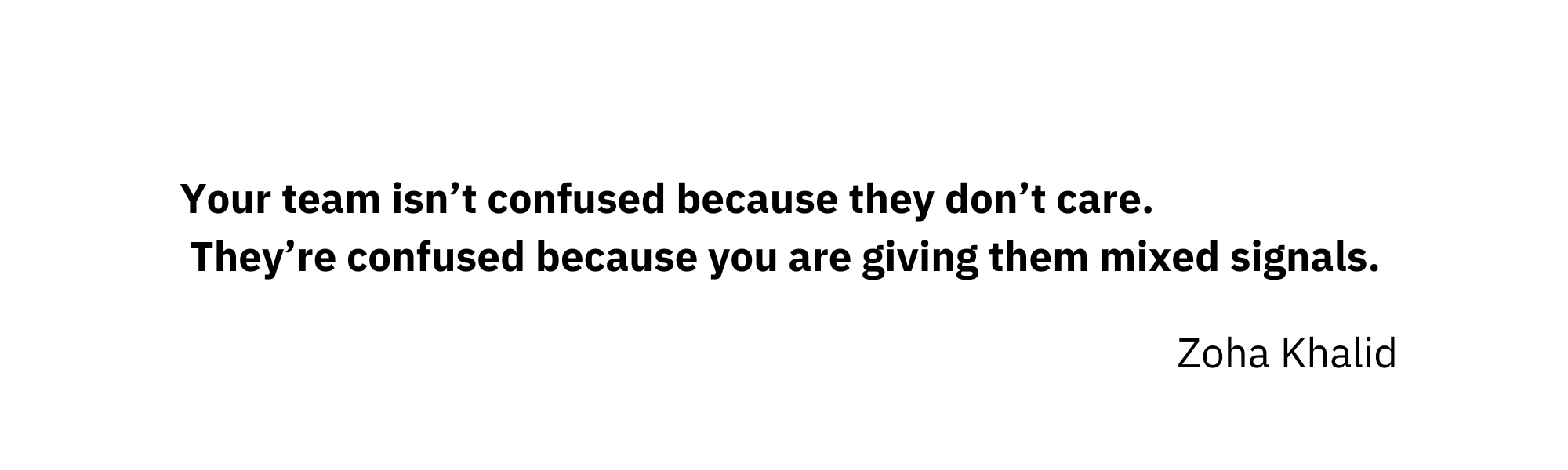
But confusion isn’t usually caused by a lack of information.
It’s caused by unclear leadership signals.
The leadership check most founders skip
Before assuming your team isn’t paying attention, pause and ask yourself this:
Can someone on my team clearly answer these three questions without checking with me?
What matters most right now?
What does success look like this week, not eventually?
What can safely wait without consequences?
If those answers aren’t obvious, your team isn’t underperforming.
They’re operating without a compass.
Why teams struggle when priorities are fuzzy
In the absence of clarity, people don’t stop working.
They start interpreting.
Teams read into:
What leaders respond to fastest
What feedback shows up repeatedly
What work gets quietly rewarded
What mistakes get remembered
When those signals don’t align with stated priorities, confusion grows.
People hedge. They double-check. They slow down not because they don’t care, but because they don’t want to be wrong.
A real-world pattern founders overlook
A founder says, “This quarter is about focus.”
But in the same breath:
Asks for progress on side initiatives
Jumps into tactical feedback
Shifts direction mid-week without naming it
From the founder’s perspective, this is responsiveness.
From the team’s perspective, focus feels unstable.
The strategic shift that creates clarity
Clarity doesn’t come from saying more.
It comes from signaling better.
Strong leaders consistently:
Name one clear priority
Acknowledge what matters less
Explicitly say what is not urgent
For example:
“This week, X is the priority. Y is important but secondary. Z can wait.”
This isn’t rigid leadership.
It’s generous leadership.
You’re removing guesswork so your team can move with confidence.
Final takeaway
If your team feels confused, don’t start with motivation or accountability.
Start with your signals.
Clear priorities reduce friction.
Clear signals build trust.
And clarity always beats intensity.
